

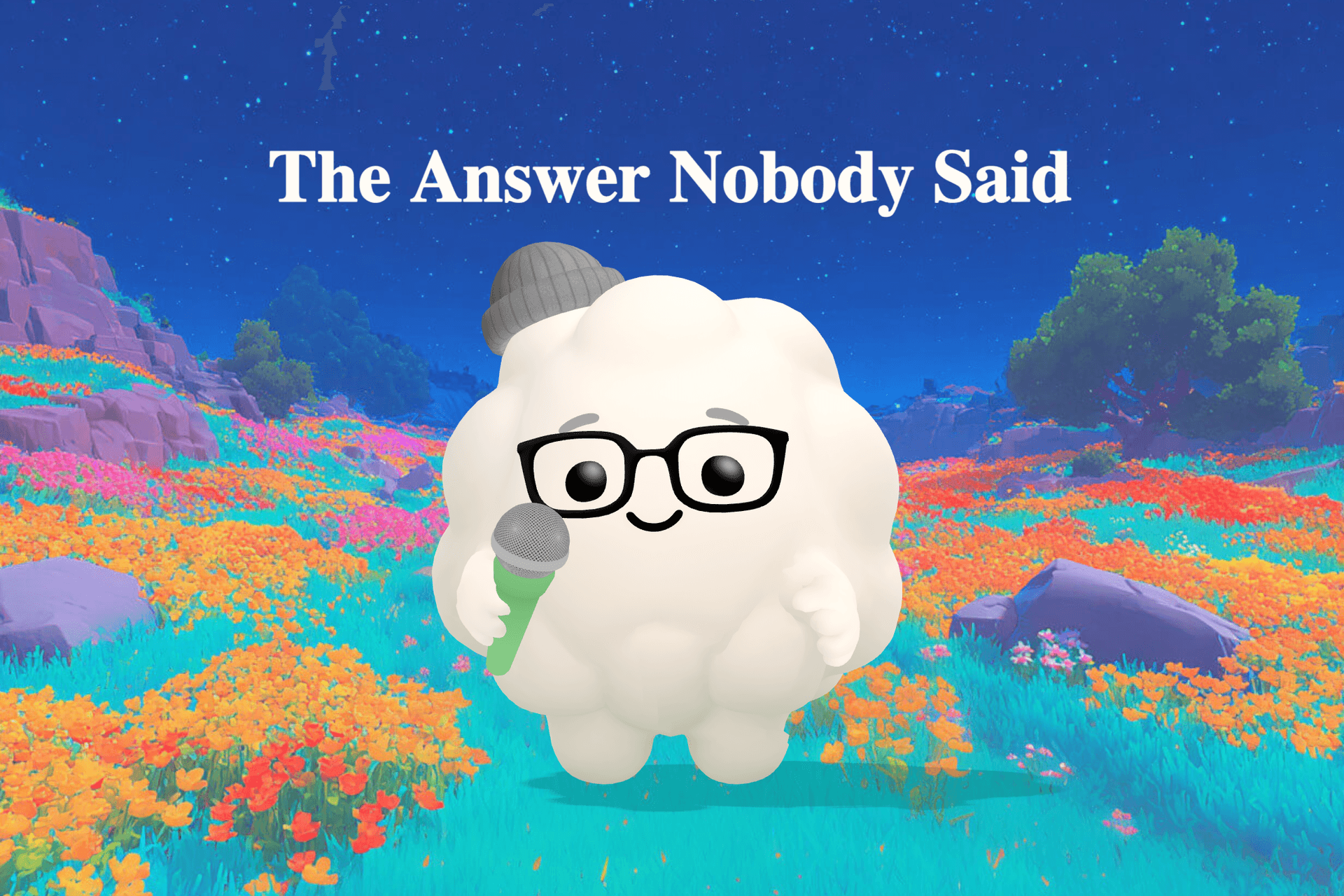
There is something deeply comforting about a story that says it is okay to be quiet, especially when the lights are low and the day is done. In The Answer Nobody Said, a boy named Eli knows every answer in class but cannot bring himself to raise his hand while twenty two pairs of eyes wait. It is one of those short stories about being shy that gently reminds kids their voice matters, even when it comes out smaller than they meant it to. If your child sees themselves in Eli, you can create a personalized version of this story with Sleepytale.
Why About Being Shy Stories Work So Well at Bedtime
Bedtime is often when quiet children finally feel safe enough to talk about the hard parts of their day. A story about being shy gives them a mirror, a way to see their own feelings reflected in a character like Eli without having to explain those feelings out loud. When a child hears about Eli watching the oak tree instead of raising his hand, they recognize that knot in the stomach, that warmth creeping across the ears. It feels less lonely to know someone else understands. That is exactly why a bedtime story about being shy works so beautifully at night. The pressure of the classroom is gone. There is no audience, no clock ticking loudly in the silence. It is just a parent and a child, tucked in together, exploring what it means to have a voice worth hearing, even when using it feels scary.
The Answer Nobody Said
Eli sat in the third row, second seat from the window.
He liked that spot because he could see the oak tree in the schoolyard, and sometimes a squirrel ran along the fence during math.
He also liked it because nobody paid much attention to him there.
That was the point.
He knew the answers.
He always knew the answers.
When Ms.
Calloway asked what seven times eight was, Eli had fifty-six in his head before she finished the sentence.
When she asked which planet had rings, he could have named all four planets with rings, not just Saturn.
When she asked about the water cycle, he could have drawn the whole diagram from memory, labeled and everything.
But he never raised his hand.
He just sat there, watching the oak tree, letting other kids stumble through guesses until someone landed close enough.
It was not that he was shy, exactly.
He just did not like the feeling of everyone looking at him at once.
Twenty-two pairs of eyes, all pointed the same direction.
His direction.
His stomach did something unpleasant whenever he imagined it.
The kid next to him was Marcus.
Marcus raised his hand for everything, even when he had no idea.
He once answered "a triangle" when Ms.
Calloway asked about the American Revolution.
Marcus did not seem to mind being wrong.
Eli found that baffling.
He kept a collection of erasers shaped like food in his desk drawer and sometimes took them out and lined them up during silent reading.
Nobody knew why.
He never explained.
On a Tuesday in October, Ms.
Calloway wrote a question on the board in big letters.
She underlined it twice.
The question was: Why do leaves change color in autumn?
She turned around and looked at the class with her arms crossed, the way she did when she expected a real answer, not a guess.
Hands went up.
A few of them.
Maya said something about the cold.
Jordan said the trees got tired.
Someone in the back said it was because of the wind, and a couple of kids nodded like that made sense.
Ms.
Calloway listened to each one, her expression patient but waiting.
She wrote their answers on the board and then looked at the class again.
Nobody else raised a hand.
The room went quiet.
Not the comfortable kind of quiet, the kind where everyone is thinking.
This was the other kind.
The kind where the clock sounds loud and someone's sneaker squeaks against the floor and it feels like the silence has weight.
Ms.
Calloway let it sit there.
She was good at that.
Eli looked at the board.
He looked at the oak tree outside.
The leaves on it were already going orange at the edges.
He knew exactly why.
Chlorophyll breaking down.
The green fading.
The yellow and red pigments that were always there, hidden underneath, finally getting their turn.
He looked at his desk.
He looked at Marcus.
Marcus was staring at the ceiling like the answer might be written up there.
Eli leaned over.
His voice was barely anything, just air with shape to it.
"It's the chlorophyll," he said.
"The green stuff breaks down and the other colors show through."
Marcus turned his head so fast his chair creaked.
He stared at Eli for one full second.
Then he shot his hand into the air.
"Yes, Marcus," Ms.
Calloway said.
"It's the chlorophyll," Marcus said, loud and certain, like he had known it all along.
"The green breaks down and the other colors were there the whole time underneath."
He paused.
Then he pointed directly at Eli.
"He told me."
Twenty-two pairs of eyes swung left.
Eli's face went hot.
The heat started at his ears and moved inward.
He could feel it.
He pressed his hands flat on his desk.
Ms.
Calloway looked at him.
Not the waiting look.
A different one.
"Eli," she said.
"Is that right?"
The clock ticked.
Someone's sneaker squeaked again.
"Yes," Eli said.
It came out smaller than he meant it to.
"Can you tell us more?"
His stomach did the unpleasant thing.
But his mouth opened anyway.
"The chlorophyll is what makes leaves green," he said, a little louder now.
"In summer there's so much of it you can't see the other pigments.
But in fall, when the days get shorter, the tree stops making chlorophyll.
It breaks down.
And then the yellow and orange and red that were already in the leaf, they were always there, they just get to show."
He stopped.
His heart was going fast.
Ms.
Calloway smiled.
Not the polite kind.
The real kind, where her eyes changed too.
"That is exactly right."
She wrote it on the board.
All of it.
And she put Eli's name next to it.
At lunch, Marcus dropped his tray across from Eli and sat down without asking.
He had chocolate milk and a peanut butter sandwich with the crusts cut off, which seemed like a very specific request for a third grader.
"You knew that the whole time," Marcus said.
It was not a question.
Eli poked at his macaroni.
"Yeah."
"Why don't you ever say stuff?"
Eli thought about how to explain the twenty-two pairs of eyes.
He thought about his stomach.
He said, "I don't know.
I just don't."
Marcus took a long drink of chocolate milk.
"That's weird," he said, not unkindly.
"You should say stuff.
You know a lot of stuff."
Eli did not answer right away.
He watched a lunch aide wipe down a table across the room, working in slow circles.
"Does it bother you?"
he asked finally.
"When you get it wrong in front of everyone?"
Marcus looked at him like he had asked something in another language.
"Kind of," he said.
"But then it's over."
Eli thought about that.
Then it's over.
The next morning, Ms.
Calloway asked what the longest river in the world was.
Three kids guessed.
One said the Mississippi.
One said the Amazon.
One said the Nile, which was close enough to start a small argument.
Eli's hand went up.
Slowly.
Like it was testing the air.
Ms.
Calloway saw it immediately.
"Eli."
The eyes came.
All of them.
His ears went warm.
"The Nile," he said.
"But some scientists say the Amazon, depending on how you measure.
It's actually still debated."
Somebody in the back said, "Whoa."
Ms.
Calloway wrote both rivers on the board and drew a small question mark between them.
"That," she said, "is a very honest answer."
Eli sat back in his chair.
His heart was still going a little fast.
His ears were still warm.
But there was something else too, something that did not have a clean name, sitting right in the middle of his chest.
Outside the window, the oak tree stood in the October light.
The leaves were more orange than yesterday.
The green was going, going.
And underneath, all that color, patient and quiet, finally getting its turn.
The Quiet Lessons in This About Being Shy Bedtime Story
This story explores courage, honesty, and the unexpected power of friendship. Eli whispering the chlorophyll answer to Marcus shows that bravery does not always look loud; sometimes it starts as barely a breath directed at the person sitting next to you. Marcus pointing back and saying 'He told me' highlights how true friendship means giving credit and making space for someone else to shine, while Eli's nuanced answer about the Nile shows that honesty can be braver than simply being correct. These themes settle gently at bedtime, when a child is relaxed enough to absorb the idea that being brave can start very, very small.
Tips for Reading This Story
When Eli whispers the chlorophyll answer to Marcus, drop your voice to barely a breath so your child leans in close to listen. Speed up and raise your volume when Marcus shoots his hand into the air and announces the answer with total confidence, giving him a bold, energetic tone. After Ms. Calloway says 'That is exactly right,' pause for a few seconds and let the warmth of that moment settle before continuing.
Frequently Asked Questions
What age is this story best for?
This story works best for children ages five through nine. Younger listeners will connect with Eli's nervous stomach and the simple sweetness of Marcus dropping his tray across from him at lunch, while older kids will appreciate the science behind chlorophyll and the thoughtful debate about the Nile versus the Amazon.
Is this story available as audio?
Yes, you can listen to the full audio version by pressing play at the top of the page. Hearing the contrast between Eli's barely there whisper and Marcus's loud, certain declaration about chlorophyll makes the classroom scenes come alive. The quiet moment when Eli finally raises his hand to answer about the longest river is especially moving when heard aloud.
Why does the story use autumn leaves as such an important detail?
The autumn leaves on the oak tree outside Eli's window serve as a beautiful metaphor for Eli himself. Just like the yellow, orange, and red pigments that are always hidden beneath the green chlorophyll, Eli's knowledge and voice have been there all along, patiently waiting for their turn to show. It connects the classroom science lesson to his personal journey in a way children can see and feel.
Create Your Own Version
Sleepytale turns your child's own experiences into a personalized bedtime story in moments. You can swap Eli's classroom for a soccer field, change the oak tree to a garden full of butterflies, or replace the science question with a moment from your child's own day. In just a few taps, you will have a cozy, calming tale about finding your voice that feels like it was written just for your little one.
Looking for more social stories for kids?
Stories About Losing A Tooth
A stubborn tooth finally pops out into mashed potatoes at dinner in one of our favorite short stories about losing a tooth.
Stories About Getting Glasses
Explore short stories about getting glasses where a boy named Elliot sees his mom's freckles for the very first time.

Stories About Changing Schools
A yellow sticky note with a crooked map leads to real friendship in short stories about changing schools for bedtime.
Stories About Missing A Parent
Ever wonder if short stories about missing a parent could comfort your child the way Nora wraps herself in her dad's old sweatshirt.
Stories About Deployed Parent
Discover short stories about deployed parent love through Oliver, who plays his mom's recorded voice a pillow until the house feels right again.
First Day Of Daycare Stories
Milo's plan was simple: do not cry. Discover short first day of daycare stories where a wobbly block tower changes everything.