

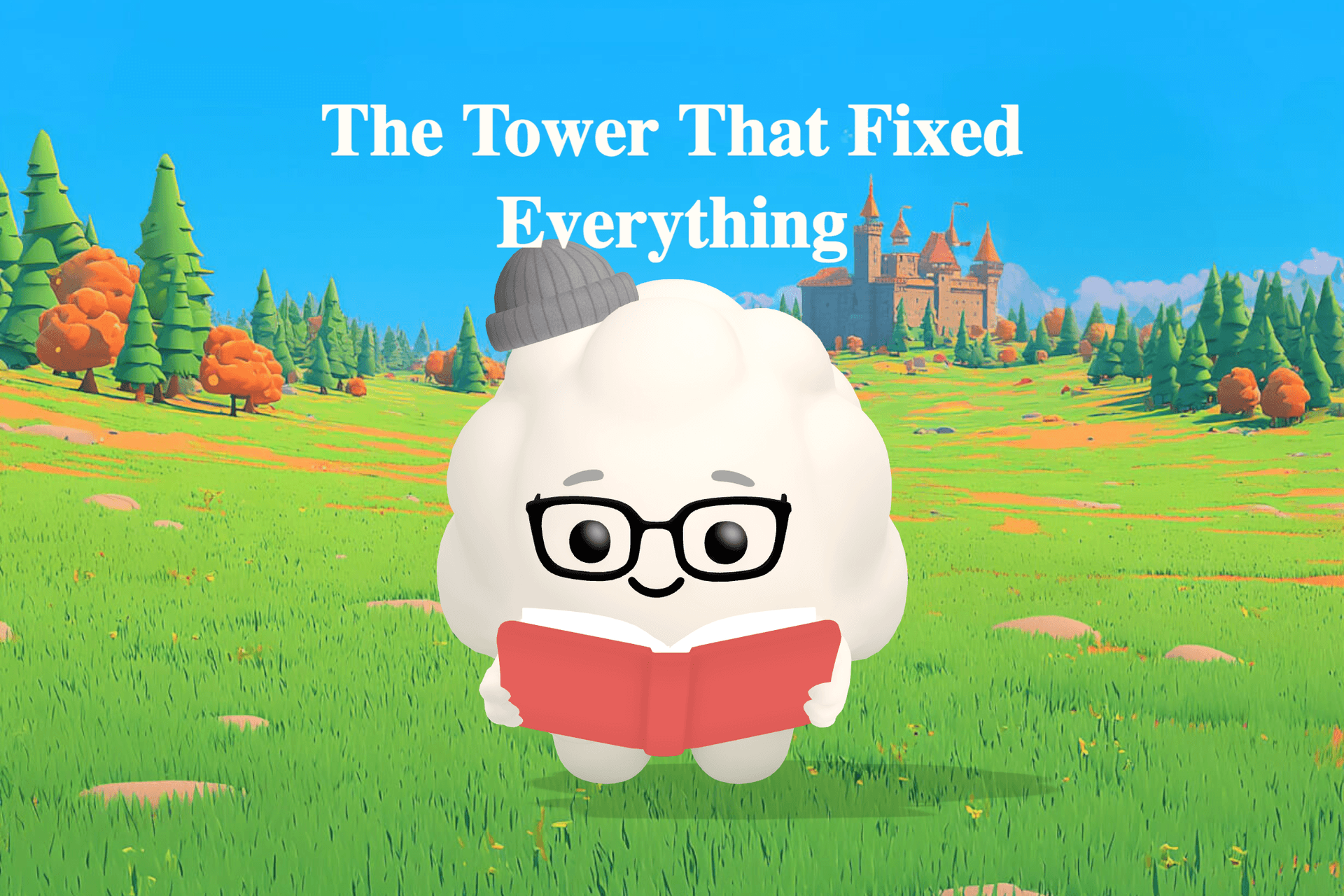
There's something deeply comforting about a story that starts with a big, scary feeling and ends with a belly laugh. In The Tower That Fixed Everything, a boy named Milo walks into daycare determined not to cry, only to discover that a wobbly block tower and a new friend named Desmond can turn the scariest morning into one he never wants to leave. It's one of those short first day of daycare stories that wraps up fear, friendship, and crashing blocks into the coziest bedtime read. If your little one loved this tale, try creating a personalized version with Sleepytale.
Why First Day Of Daycare Stories Work So Well at Bedtime
Starting somewhere new is one of the biggest feelings a small child can face, and bedtime is often when those feelings bubble back up. A first day of daycare story to read before sleep gives kids a chance to revisit that swirl of nervousness and excitement from a safe, cozy place. When the lights are low and a parent's voice is close, even the scariest “new place“ feels manageable. That's what makes this theme so powerful at night. Children get to watch a character feel afraid, find courage, and come out the other side smiling. The rhythm of tension and relief mirrors the way a child's own body settles into sleep: restless at first, then gradually, wonderfully calm.
The Tower That Fixed Everything
His name was Milo, and he had a plan.
The plan was simple: do not cry.
He had practiced in the car.
He had practiced in the driveway.
He had practiced while his dad held his hand and walked him through the door of Room Four, past the cubbies with the animal stickers, past the table with the play dough that smelled like fake strawberries.
He had practiced all the way up until the exact moment his dad said, "Okay, buddy.
I'll be back at noon."
Then the plan fell apart.
Milo cried.
Not a little.
Not a polite, dignified sort of cry.
He cried the way a faucet cries when someone forgets to turn it off.
His teacher, Ms.
Okafor, stood nearby with a clipboard.
She had kind eyes and a purple cardigan with a small stain near the pocket that might have been grape juice or paint.
Nobody knew.
She did not rush over.
She did not say "shh."
She just waited, and she counted quietly to herself, because she had been teaching four-year-olds for eleven years and she knew that crying, like a thunderstorm, always passes.
Four minutes.
That was how long it took.
Milo hiccupped.
He wiped his nose on his sleeve.
He looked around the room for the first time, really looked, and saw the blocks in the corner.
Wooden ones, stacked in a bin.
He stared at them.
He did not move yet.
But he stopped crying, which was something.
That was when the kid appeared.
His name, Milo would later learn, was Desmond.
Desmond had a gap between his front teeth and shoes that lit up when he walked, and he walked everywhere like he was in a hurry to get to the next interesting thing.
He picked up a block from the bin without looking at Milo.
Then he held it out, sideways, like an offering, like it was the most normal thing in the world to hand a crying stranger a block.
Milo sniffed.
He looked at the block.
It was a rectangle, plain wood, slightly scuffed on one corner.
He took it.
Desmond nodded, satisfied, and grabbed another block for himself.
He set it on the floor.
Milo set his next to it.
Neither of them said anything.
The classroom hummed around them, kids painting, a puzzle being assembled nearby, Ms.
Okafor telling someone named Priya that glue sticks were not for hair.
Milo and Desmond kept stacking.
One block, then two, then five, then eight.
The tower got taller.
It started to lean.
Milo held his breath.
"It's gonna fall," Desmond said.
"It's not," Milo said, even though it clearly was.
"It is."
"It's not."
It fell.
Blocks scattered across the rug in every direction.
One slid under a chair.
One hit Desmond's shoe and made it light up.
They both looked at the wreckage, and then, without any warning, they both started laughing.
Desmond laughed so hard he had to put his hands on his knees.
Milo laughed until his stomach hurt, which was a strange and excellent feeling after crying for four minutes straight.
"Again?"
Desmond said.
"Again," Milo said.
They rebuilt.
This time Desmond held the base steady while Milo placed the top blocks very carefully, his tongue pressed to his upper lip in concentration.
The tower made it to eleven blocks before it wobbled.
Twelve before it gave up entirely and crashed even harder than before.
More laughing.
Ms.
Okafor glanced over and wrote something on her clipboard.
Milo did not notice.
He was already reaching for the blocks again.
At some point, someone brought over a triangular block and neither of them knew what to do with it.
They tried putting it on top.
That was a disaster.
They tried using it as a base.
Also a disaster.
Desmond suggested they use it as a ramp for a small plastic horse that had appeared from somewhere.
This worked surprisingly well.
The horse slid down, flew off the edge of the rug, and landed near Ms.
Okafor's foot.
She picked it up without comment and set it on the table beside her.
Desmond retrieved it two minutes later.
She did not say a word.
Milo forgot to think about the door.
That was the thing about the blocks.
They required his full attention.
You had to think about balance, about which block went where, about whether Desmond was going to sneeze again and knock everything over like he did the third time.
You could not think about the door and the blocks at the same time.
The door lost.
They had a snack.
Crackers and apple slices.
Desmond ate his apple slices first and his crackers second, in a very deliberate order, and when Milo asked why, Desmond said, "Because crackers are better when you're already a little full."
Milo thought about this.
It was possibly the wisest thing he had ever heard.
They went outside.
There was a sandbox and a climbing structure and a bucket of sidewalk chalk.
Desmond drew a picture of a dinosaur that looked more like a cloud with teeth.
Milo drew a tower, tall and slightly leaning, which Desmond said was very realistic.
Then Ms.
Okafor said it was almost noon, and parents would be arriving, and everyone should get their things from their cubbies.
Milo's cubby had a frog sticker on it.
He found his backpack.
He put on his jacket.
He stood by the door with the other kids, and that was when he saw his dad's face through the window in the door, that familiar face, a little tired, smiling when he spotted Milo.
The door opened.
"Hey, buddy," his dad said.
"Ready to go?"
Milo looked at his dad.
He looked back at Desmond, who was pulling on his light-up shoes by the cubby with the turtle sticker.
He looked at the block bin in the corner, already restocked for tomorrow, the triangular block sitting right on top.
"I don't want to go," Milo said.
His dad's face did something complicated.
His eyebrows went up.
His mouth opened.
He looked at Ms.
Okafor, who pressed her lips together in a way that was not quite a smile but was close.
"You...
don't want to go?"
his dad said slowly.
"No."
"But this morning you said..."
"I know what I said."
His dad crouched down.
"Milo.
Do you mean you don't want to leave school?"
Milo thought about how to explain it.
The blocks.
The tower falling.
Desmond's gap-toothed laugh.
The horse on the ramp.
The crackers being better when you were already a little full.
"Yeah," he said.
"That's what I mean."
His dad sat back on his heels.
He let out a long breath.
Then he laughed, just once, short and surprised.
He shook his head.
"Okay," he said.
"Okay.
We'll come back tomorrow."
"Promise?"
"Promise."
Milo picked up his backpack.
Desmond waved from across the room, a big, enthusiastic wave like they had known each other for years.
Milo waved back.
He walked out the door into the afternoon, the concrete warm under his sneakers, the sky very blue, thinking about eleven blocks, then twelve, then the whole wonderful crashing sound of it all coming down.
The Quiet Lessons in This First Day Of Daycare Bedtime Story
This story gently explores the courage it takes to accept help from a stranger, shown in the moment Milo takes the plain wooden block from Desmond's outstretched hand. It also celebrates the value of trying again after failure; each time the tower crashes, the boys laugh and rebuild without hesitation. There's a quiet thread about being present, too, as Milo discovers that focusing on the blocks makes him forget to watch the door. These lessons land softly at bedtime, when a child's mind is open and reflective.
Tips for Reading This Story
Give Desmond a slightly breathless, eager voice to match his hurrying personality, and slow way down during the block stacking scenes, pausing right before each crash with a dramatic wobble in your tone. When the tower finally falls, let your voice burst into surprised energy, then settle into warm, easy laughter alongside the boys. At the very end, when Milo tells his dad “I don't want to go,“ pause for a beat of silence so the twist can land with its full, sweet weight.
Frequently Asked Questions
What age is this story best for?
This story is ideal for children ages 3 to 6, especially those approaching or adjusting to their own first daycare experience. The emotions Milo feels, from crying at drop off to laughing over crashed block towers, are very relatable for preschoolers. The simple, playful language and short length also make it easy for younger listeners to follow all the way through.
Is this story available as audio?
Yes, you can listen to the full audio version by pressing play at the top of the page. It's a treat to hear Milo and Desmond's block tower debates come to life, especially the back and forth of “It's gonna fall“ and “It's not.“ The audio also captures the satisfying crash of the blocks and the warm shift in Milo's voice when he tells his dad he wants to stay.
Why does the block tower matter so much in this story?
The block tower works as the heart of the story because it gives Milo something to focus on besides his fear. Each time he and Desmond stack and rebuild, Milo forgets about the door and the fact that his dad left. The tower also becomes the foundation of their friendship, turning two strangers into partners through the simple, shared joy of building something together and laughing when it all comes crashing down.
Create Your Own Version
Sleepytale turns your child's real life moments into personalized bedtime stories in seconds. You can swap in your child's name for Milo, change the wooden blocks to a favorite toy like magnet tiles or train tracks, or set the story in a new classroom with a teacher who looks just like theirs. In just a few taps, you'll have a cozy, calming tale that makes tomorrow's daycare morning feel a little less scary.
Looking for more social stories for kids?
Stories About Losing A Tooth
A stubborn tooth finally pops out into mashed potatoes at dinner in one of our favorite short stories about losing a tooth.
Stories About Getting Glasses
Explore short stories about getting glasses where a boy named Elliot sees his mom's freckles for the very first time.

Stories About Changing Schools
A yellow sticky note with a crooked map leads to real friendship in short stories about changing schools for bedtime.

Stories About Missing A Parent
Ever wonder if short stories about missing a parent could comfort your child the way Nora wraps herself in her dad's old sweatshirt.

Stories About Deployed Parent
Discover short stories about deployed parent love through Oliver, who plays his mom's recorded voice a pillow until the house feels right again.
Stories About Moving To A New House
What if a house could echo your feelings back? These short stories about moving to a new house follow Marcus through empty rooms and a bright red door.