
Story With Moral Lesson
By

Dennis Wang, Bedtime Story Expert
6 min 42 sec
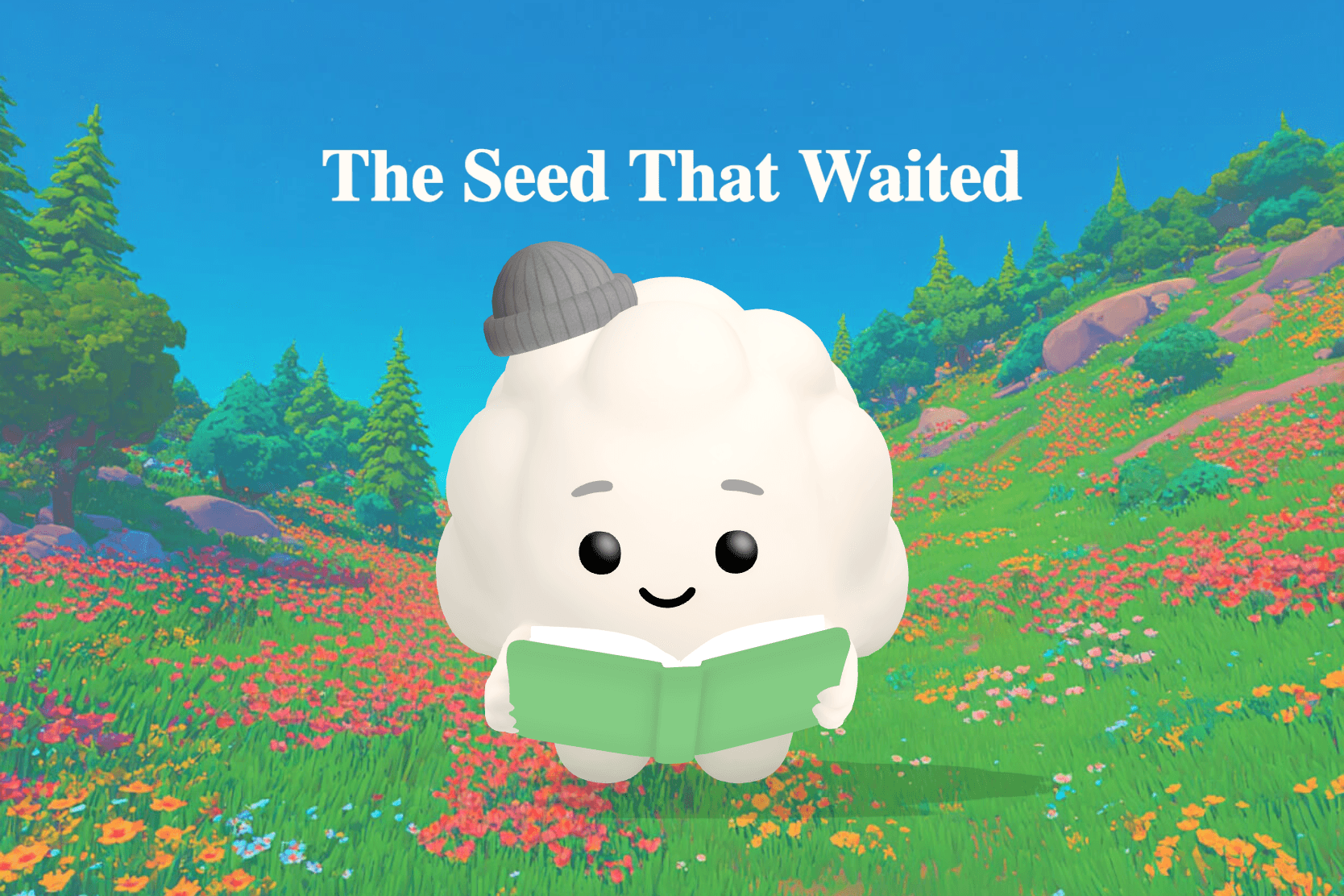
There is something deeply calming about watching things grow, especially when you are snuggled under the covers and the day is done. In The Seed That Waited, a girl named Maren plants two identical seeds and discovers that the one everyone overlooked was quietly building something remarkable underground. It is a beautiful short story with moral lesson about patience, hidden strength, and trusting the process even when nothing seems to be happening. If your child loved this tale, you can create your own personalized version with Sleepytale.
Why With Moral Lesson Stories Work So Well at Bedtime
Children are natural seekers of meaning. Even before they can articulate it, they want to understand why things happen and what choices lead to what outcomes. A story with moral lesson to read at bedtime gives kids a gentle framework for thinking through those big questions while they are relaxed, receptive, and safe under their blankets. The quiet of the evening makes these ideas land softly rather than feeling like a lecture. Stories like these also give parents a natural opening for conversation. Instead of telling a child what to value, you can simply ask, “What do you think about that?“ after the last page. The moral becomes something discovered together, not handed down. That shared moment of reflection is one of the most powerful parts of any bedtime routine.
The Seed That Waited 6 min 42 sec
6 min 42 sec
Maren had dirt under her fingernails before breakfast most mornings.
She did not mind.
The farm was hers and her grandfather's, and the two of them shared it the way some people share a coat, taking turns, overlapping at the edges.
Grandpa Teo handled the orchard.
Maren handled the garden plot beside the barn, the one with the dark soil that smelled like rain even when it had not rained in days.
One spring morning, Grandpa Teo pressed two seeds into her palm.
They looked identical.
Round, brown, no bigger than a button.
"Same kind," he said.
"Same soil.
Same water.
You'll see something interesting."
Maren planted them side by side, two hand-widths apart, and marked each spot with a stick.
She watered them every morning before school, crouching down to look for any sign of green.
The first seed did not waste time.
By the end of the first week, a pale shoot curled up through the soil.
By the second week, it had leaves.
Real leaves, shaped like small open hands.
By the end of the month, it stood as tall as Maren's knee, and her neighbor Mrs.
Polly leaned over the fence and said, "Now that is a plant.
Look at it go."
Maren looked at the other spot.
Nothing.
Just a faint crack in the soil, so thin she almost missed it.
She pressed her finger near it, not on it, just near.
The ground was firm.
She kept watering both spots anyway.
The tall plant kept growing.
By midsummer it reached Maren's shoulder, and her classmate Dov came by on his bicycle and stopped to stare.
"What is that thing?"
he asked.
"A plant," Maren said.
"Obviously.
But it's huge."
He dropped his bike in the grass, which he always did, never leaning it against anything, just letting it fall.
"What about that one?"
He pointed at the second stick.
Maren looked.
There was a small cluster of leaves now, low to the ground, no taller than her thumb.
They were dark green, almost waxy.
"That one's slower," she said.
Dov made a face.
Not a mean face, just an honest one.
"Looks like it gave up."
Maren did not say anything to that.
She pulled a weed from near the base of the slow plant instead, a thin stringy one she had missed the day before.
Grandpa Teo watched from the porch sometimes.
He never said much during those weeks.
He brought her a glass of water once while she was crouched by the garden, and he sat on the overturned bucket he kept near the barn, and they were quiet together for a while.
A crow landed on the fence post and looked at them both with one eye, then flew off.
"Is the slow one sick?"
Maren asked.
"No," Grandpa Teo said.
"Then why?"
He thought about it.
"Some things are busy where you can't see them."
Maren turned that over in her head the way she turned stones over at the creek, looking at the underside.
The tall plant flowered in July.
Big yellow blooms that opened in the morning and faced the sun all day.
Everyone who visited said something about it.
Maren's mother took a photograph.
Mrs.
Polly brought it up twice at the farm stand.
The slow plant had grown, but only to Maren's ankle.
Its leaves were thick and close to the ground.
No flowers.
No height to speak of.
Maren watered it the same as always.
The storm came on a Thursday night in August.
Maren heard it start as a low sound, like someone dragging furniture across a floor far away.
Then the wind picked up and the rain came sideways, and she lay in bed listening to the barn creak.
She thought about the garden.
She thought about both plants.
There was nothing she could do in the dark and the rain, so she pulled her blanket up and waited.
In the morning, the sky was washed pale and clean.
Puddles sat in the low parts of the yard.
A branch had come down from the oak tree near the fence.
Maren went to the garden in her boots.
The tall plant was broken.
Not bent, broken, snapped at the base, its long stem lying across the soil with the yellow flowers face-down in the mud.
The roots had pulled partway out of the ground.
She could see them, pale and thin, barely longer than her fingers.
She stood there for a moment.
The mud smelled sharp and green.
Then she looked at the second plant.
It was still there.
Low, compact, every leaf in place.
The soil around it was disturbed from the rain but the plant itself had not moved.
Maren crouched down and pressed her fingers into the earth beside it, carefully.
The ground resisted.
Whatever was under there went deep.
She sat back on her heels.
Grandpa Teo came out with two mugs of tea, which he only did on mornings he thought were worth marking.
He handed her one without a word and looked at the garden.
"The tall one's gone," Maren said.
"I see that."
"The roots weren't deep enough."
He nodded.
He sipped his tea.
A worm was making its way across the path between them, slowly, going somewhere with great intention.
"Was it always going to happen that way?"
Maren asked.
Grandpa Teo considered this with the seriousness he gave all her real questions.
"Not always.
But the slow one was building something the whole time.
Just underground.
Just where nobody was looking."
Maren looked at the small plant.
In the morning light, she could see that it had a bud on it now, a tight closed thing she had not noticed before the storm.
Small and green and not ready yet.
She did not rush it.
Over the next few weeks, Maren cleared away the broken plant and turned the soil where it had been.
She gave the slow plant more room.
She kept watering it the same way, same time each morning, same amount.
Dov came by again on his bicycle and saw the empty spot.
"What happened to the big one?"
"Storm got it," Maren said.
He looked at the small plant.
"That one made it though."
"It did."
He thought about that for a second, standing over his bicycle, which was lying in the grass again.
"Huh," he said.
That was all.
But it was a real huh, the kind that means something shifted.
The bud opened in September, on a morning when the air had turned and you could smell autumn coming in from the north.
The flower was not large.
It was not yellow like the other one had been.
It was a deep reddish orange, and it opened slowly over the course of three days, one layer at a time.
Maren did not take a photograph.
She just looked at it.
The light that morning came in low and sideways across the garden, and the flower caught it and held it, and the dew on the leaves had not burned off yet, and everything smelled like soil and the end of summer.
Maren sat cross-legged in the grass beside it for a long time, her tea going cold in her hand, not minding at all.
The Quiet Lessons in This With Moral Lesson Bedtime Story
This story explores patience through Maren's steady, daily commitment to watering a seed that showed almost no visible progress for months. It also teaches the value of looking beneath the surface, captured perfectly in Grandpa Teo's observation that “some things are busy where you can't see them.“ Finally, it gently illustrates that outward impressions can be misleading; the tall, showy plant turned out to be fragile, while the quiet one had built deep, enduring roots. These lessons settle beautifully into a child's mind at bedtime, when the world is still enough to really absorb them.
Tips for Reading This Story
Give Grandpa Teo a slow, warm voice with long pauses between his words, especially when he says “some things are busy where you can't see them.“ Speed up slightly when describing the tall plant's rapid growth and Mrs. Polly's excited praise, then slow way down for the scenes with the small plant to mirror its patience. When you reach the morning after the storm, lower your voice almost to a whisper as Maren discovers the broken stem lying in the mud, and let the silence sit before she turns to look at the one that survived.
Frequently Asked Questions
What age is this story best for?
This story works beautifully for children ages 4 to 9. Younger listeners will enjoy the suspense of watching Maren's two seeds grow so differently, while older children will connect more deeply with Grandpa Teo's wisdom about things being busy where you cannot see them. The storm scene is gentle enough not to frighten little ones, but vivid enough to captivate bigger kids.
Is this story available as audio?
Yes, just press play at the top of the page to hear the full story read aloud. The audio version is especially lovely during the storm scene, where the narration can mirror the building tension and then the quiet, still morning that follows. Listening to Grandpa Teo's calm, unhurried dialogue in audio adds a warmth that feels like sitting on that overturned bucket beside the barn with Maren.
Why does the second seed take so long to grow in the story?
In the story, the second seed spends its early weeks building deep, strong roots underground instead of rushing upward to be seen. Grandpa Teo explains that “some things are busy where you can't see them,“ meaning the seed was doing important work that simply was not visible yet. When the August storm arrives, those deep roots are exactly what keep the small plant safe while the tall one snaps at its base.
Create Your Own Version
Sleepytale turns your child's imagination into a fully personalized bedtime tale with meaningful lessons woven right in. You can swap Maren's garden for a coral reef, replace the two seeds with baby sea turtles, or set the whole story on a rooftop in a big city. In just a few clicks, you will have a calm, cozy story ready for tonight's bedtime routine.
Looking for more educational bedtime stories?

Folklore Examples
Discover short folklore examples through a library night where Anansi the spider, a loyal crane, and a clever hare teach timeless lessons.

Children's Fable
A fast fox loses to a steady turtle in this short children's fable about patience, ripe pears, and the quiet power of one step at a time.

Science Stories For Kids
Leo and his mom explore twinkling stars with a flashlight and a jar of water in one of our coziest short science stories for kids.
Small Stories With Moral
A girl gives her red umbrella to a classmate in the rain, one of the best short small stories with moral for bedtime.

Short Christian Stories With Moral Lessons
Discover short christian stories with moral lessons like Pastor Eli's unplanned outdoor sermon that teaches kids faith grows in unexpected places.

Quick Stories With Moral Lesson
Marcus copies a science test but discovers short quick stories with moral lesson show that honest effort feels better than a perfect stolen score.