

Quick answer
To choose Montessori toys, look for three things: one clear purpose, a realistic and simple design, and natural materials, then match the toy to what your child is working on right now rather than to their exact age. Skip anything that lights up, talks, or does the playing for them, and keep only a small rotation out at a time. Sleepytale follows the same calm, child led spirit at bedtime, with screen free audio stories and lullabies for winding down once the toys are tidied away.
Once you decide you want Montessori toys, a new problem appears. Almost everything has the word Montessori on the box now, and a lot of it is just ordinary plastic with a wooden sticker. So how do you tell the real thing from the marketing? Below is a simple, no jargon way to choose Montessori toys, including what makes a good one, how to pick by age, and how to avoid overspending.
What Makes a Good Montessori Toy?
Before you can choose well, it helps to know what you are actually looking for. A good Montessori toy comes down to a few qualities that show up again and again.
It has one clear purpose. A stacking toy is for stacking. A shape sorter is for matching shapes. Your child should be able to tell what to do without a screen, a manual, or a demonstration.
It is realistic. Montessori play favors the real over the cartoonish, so think accurate animal figures rather than a purple elephant in sunglasses, or a small broom that really sweeps.
It is child led. The toy waits for the child instead of rushing them along with lights and sounds. The pace and the outcome belong to your little one.
It uses natural materials. Wood, cotton, metal, and silicone feel good in the hand and hold up to years of use. This is a strong preference rather than a hard rule, but it is part of why these toys last.
It gives built in feedback. A puzzle piece either fits or it does not, so the child knows when they have succeeded without anyone keeping score.
How to Choose Montessori Toys: A Simple Checklist
When you are standing in the aisle or scrolling a shop, run the toy through a quick mental checklist.
First, ask who is doing the work. If the toy lights up, sings, and performs the moment it is touched, the toy is doing the work, not the child. Put it back.
Second, look for a single, obvious goal. If you cannot tell in a glance what the toy is for, your child probably cannot either.
Third, check the materials and the weight. Natural, sturdy, pleasant to hold, and free of unnecessary parts is what you want.
Fourth, picture it in a year. The best Montessori toys grow with a child and can be used in more than one way as skills develop, which is what makes them worth the shelf space.
If a toy passes those four questions, it is very likely a genuine Montessori choice, no matter what the box says.
How to Pick Montessori Toys by Age
The most useful rule here is to match the toy to your child's current stage, not to a strict calendar date. Children move through skills at different speeds, and the goal is to give them just enough challenge without frustration.
Babies. Grasping toys, soft fabric balls, a low mirror for tummy time, an object permanence box, and simple stacking rings support reaching, gripping, and early hand and eye coordination.
Toddlers. Now is the time for shape sorters, simple wooden puzzles, larger stacking and nesting toys, and the first taste of practical life, like a small pitcher for pouring water.
Older children. Open ended building sets, practical life tools they can really use, and materials that invite sorting, counting, and sequencing tend to hold attention and grow with them.
The simplest guide of all is to watch your child. What are they reaching for, repeating, and returning to? That is usually the skill they are working on, and the right toy meets them there.
How to Select Montessori Toys Without Overspending
It is easy to assume that choosing Montessori means buying expensive wooden everything. It does not. Price is not what makes a toy Montessori, and some of the best options are the simplest. A plain set of wooden blocks, a basket of household objects, or a homemade object permanence box can be just as rich as a designer version.
A few habits keep both the clutter and the cost down. Buy fewer, better made toys rather than many cheap ones. Choose toys that can be used in several ways so they last through more than one stage. And lean on the trick that experienced Montessori parents swear by, which is rotation. Keep only a handful of toys out at a time and store the rest, then swap them every week or two. Fewer choices almost always hold a child's attention better than a bin packed with options, and your wallet will thank you too.
A Calm, Child Led Way to End the Day
If you are drawn to Montessori toys, it is usually because you like what they stand for: calm over chaos, real over flashy, and a child who leads their own play. That same spirit does not have to stop when the toys go back on the shelf.
The end of the day is where it matters most. After the toys are tidied away, the goal shifts from building skills to helping your child settle, and a quiet, screen free wind down does that far better than one more burst of stimulation. A gentle audio companion fits the Montessori spirit surprisingly well, since there is nothing to watch and your child stays in charge of where the story goes.
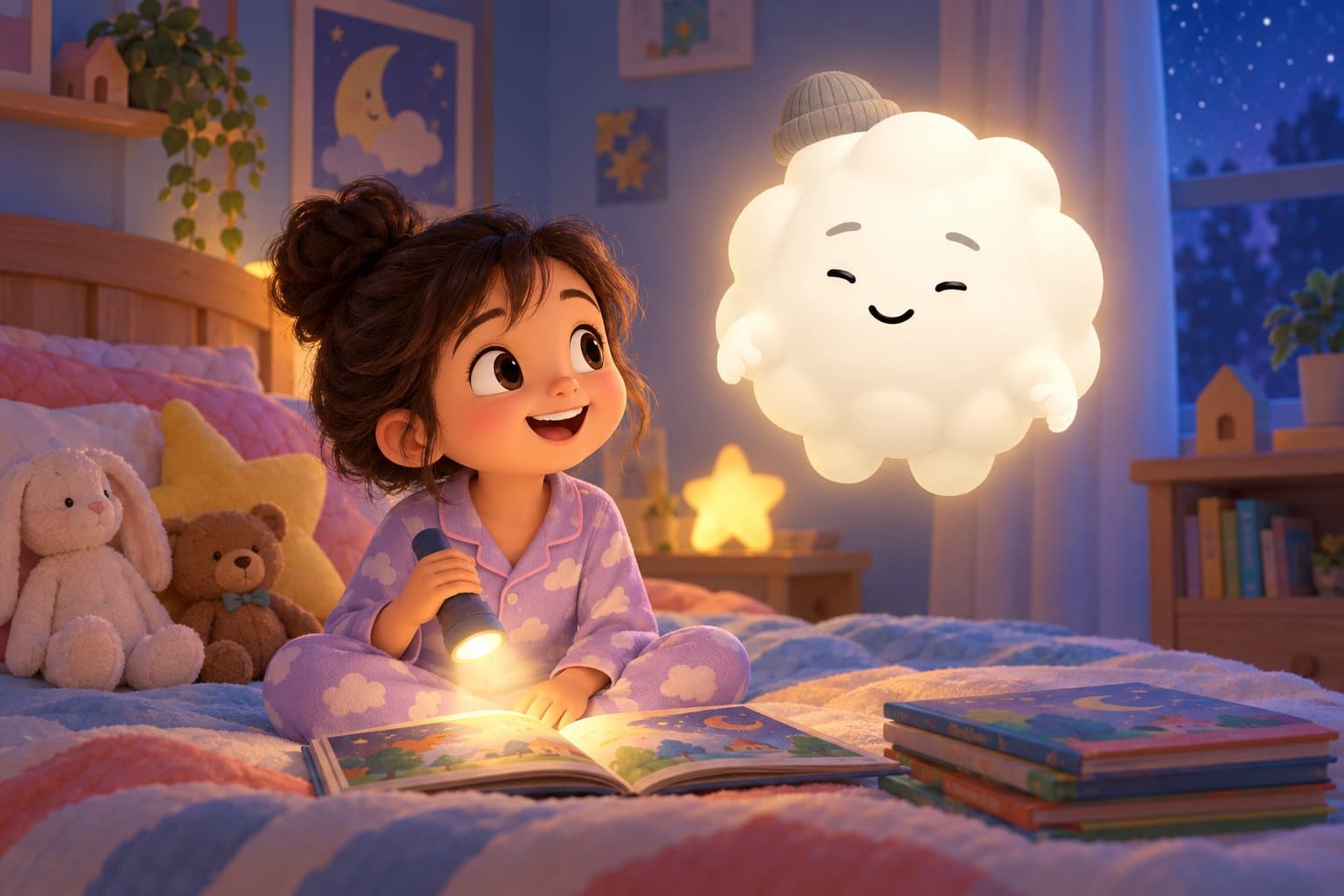
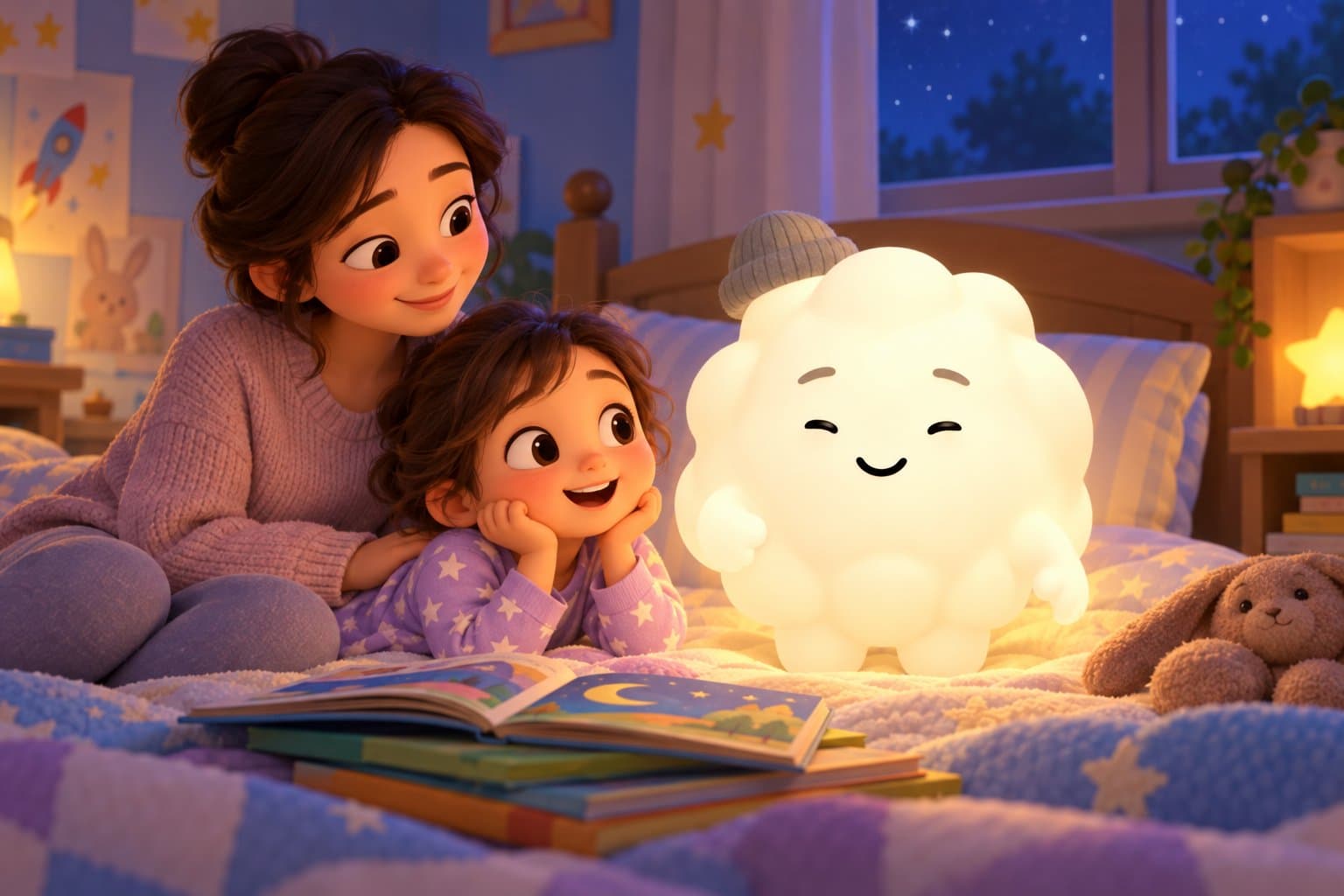
That is exactly what we built at Sleepytale. Cleo, our gentle cloud companion, listens to what your child is in the mood for and turns it into a calm personalized bedtime story or a soft lullaby for children, all without a screen. It will never replace a basket of good wooden toys, and it is not meant to. Think of it as one more calm, child led way to close out the day.
Frequently Asked Questions
How do you choose Montessori toys?
Choose Montessori toys by looking for one clear purpose, a realistic design, and natural materials, and by matching the toy to what your child is working on right now. Skip toys that light up, talk, or do the playing for the child, and favor simple objects that let your little one lead.
What makes a good Montessori toy?
A good Montessori toy is purposeful, realistic, and child led. It focuses on a single skill, it is sized for small hands, it usually uses natural materials like wood or cotton, and it gives the child built in feedback so they can tell when they have got it right without a grown up scoring them.
How many Montessori toys does a child need?
Far fewer than most homes have. A small, well chosen rotation of toys, with only a handful out at a time, tends to hold a child's attention better than an overflowing bin. Many Montessori parents keep most toys stored away and swap them every week or two.
How do I pick Montessori toys by age?
Match the toy to your child's current stage rather than a strict birthday. Babies do well with grasping toys, mirrors, and object permanence boxes, toddlers move on to stacking, sorting, and simple puzzles, and older children enjoy practical life tools and open ended building. Watch what your child is drawn to and follow that.
Are expensive Montessori toys worth it?
Not always. Price is not what makes a toy Montessori. A simple set of wooden blocks or a homemade object permanence box can be just as valuable as a designer version. Spend on durability and simplicity rather than on a label or a high price tag.
Can regular toys be used the Montessori way?
Often, yes. Many toys you already own can fit the Montessori spirit if they have a clear purpose and let your child lead. The simple test is to ask who is doing the work, the toy or the child. If the child is, it can work beautifully.
Make Bedtime the Calm Part of the Day
Sleepytale creates personalized bedtime stories around the things your child loves, narrated in a warm voice and ready in seconds. After a little quiet play, let Sleepytale carry your little one off to sleep. Try it free tonight.
Looking for more parenting guides?
AI Safety for Kids
A practical AI safety for kids checklist for parents of ages 2 to 10: privacy, content filters, honesty, parental controls and no ads. From Sleepytale.
Is ChatGPT Safe for Kids? A Parent Guide
Is ChatGPT safe for kids? An honest look at ages, risks, and what to check, plus how Sleepytale offers a kid-built AI friend for bedtime.
Is Character AI Safe for Kids? A Parent Guide
Is Character AI safe for kids? A plain-spoken guide to the risks parents raise, what to check, and what a safe AI companion for children looks like. Sleepytale.
Can AI Be a Friend to Your Child
Can AI be a friend to your child? A calm parent's guide to what AI companions are, the real risks, healthy limits, and how Sleepytale fits in.
Benefits of AI for Kids
Explore the real benefits of AI for kids, from learning support to creativity, plus the limits that matter. A calm parent guide from Sleepytale.
AI Imaginary Friends for Kids
Is an AI imaginary friend healthy for your child? Sleepytale explains why kids bond with AI, the real risks, the right age, and how to set limits that keep real friends first.