
Bedtime Stories For Kids With Autism
By

Dennis Wang, Bedtime Story Expert
6 min 33 sec
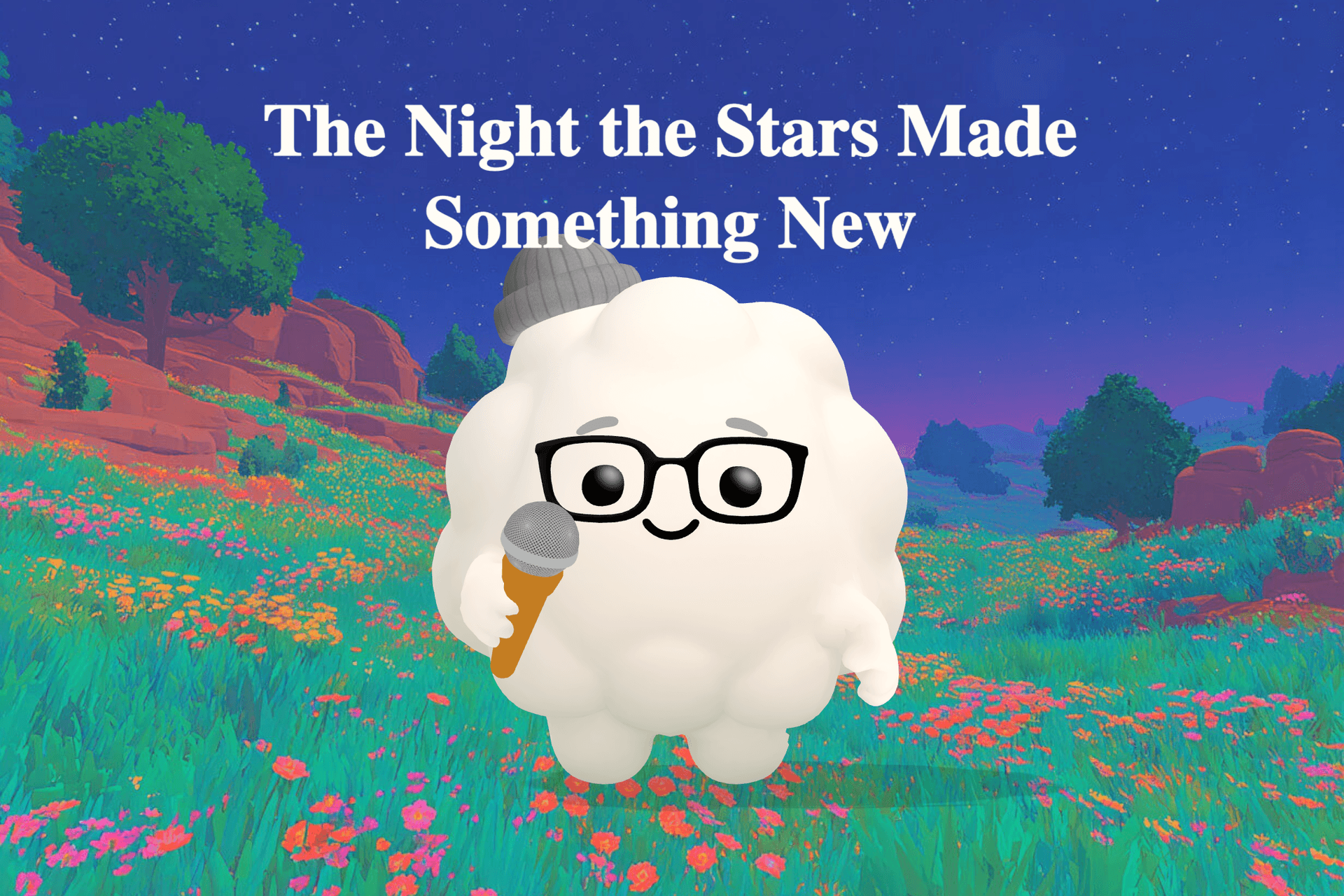
There is something deeply calming about a night sky full of familiar patterns, especially for a child who finds comfort in knowing what comes next. In this story, a boy named Oliver discovers a brand new constellation shaped like a tiny door and learns that surprises can be gentle too. If you are looking for short bedtime stories for kids with autism, this one wraps wonder inside a reassuring routine. You can even create your own personalized version with Sleepytale.
Why For Kids With Autism Stories Work So Well at Bedtime
Children on the autism spectrum often find deep comfort in routines, patterns, and knowing what to expect. A bedtime story that honors those instincts, one where the main character brushes his teeth for exactly two minutes and places his slippers just so, tells a child that their way of moving through the world is not only okay but worth celebrating. That sense of recognition can make a child feel truly seen as they settle into sleep. Stories like these also gently stretch the edges of comfort. Oliver's sky presents something unplanned, yet the story never rushes him or forces a reaction. For parents searching for bedtime stories for kids with autism to read together, this kind of pacing matters. It shows children that the unexpected does not have to be overwhelming; it can simply be something new to notice, draw, and keep.
The Night the Stars Made Something New 6 min 33 sec
6 min 33 sec
Oliver kept a list for everything.
The list lived in a green notebook on his desk, third shelf from the top, between his dictionary and his atlas.
The notebook had exactly forty-seven pages filled so far.
Page one was shoes.
Left shoe first, then right, both placed heel to the baseboard beside the front door.
Page two was books.
Tallest to shortest, spines facing out, no leaning.
Page twelve was stars.
The star list was his favorite.
He had drawn every constellation he could find, copied from a library book his mother had checked out twice so he could finish.
Orion with his belt.
The Big Dipper with its long handle.
Cassiopeia, which looked like a lopsided W.
He had labeled each one in careful capital letters and noted the best month to see them and which direction to look.
He kept the notebook open to page twelve most nights.
His room had one window, and it faced north.
Perfect.
That Tuesday in October, Oliver brushed his teeth for exactly two minutes, put his slippers under the bed with the toes pointing out, and climbed up to kneel on his mattress with his elbows on the sill.
The glass was cold.
Outside, the yard was dark and the oak tree was a black shape against a darker sky.
He opened his notebook.
He found Cassiopeia right away, up and to the left.
He found the Big Dipper.
He moved his finger along the page, checking each one.
Then he stopped.
There was a cluster of stars he did not recognize.
Six of them, maybe seven, arranged in a shape that was not in his notebook.
Not on any page.
He pressed his nose closer to the glass.
The stars were not especially bright.
They were not doing anything dramatic.
They were just there, in a shape he could not name, sitting in the space between Cassiopeia and the tree line.
He checked his notebook again.
He turned to the back pages where he kept blank space for additions.
He looked up.
He looked down.
He looked up again.
Nothing matched.
His stomach did a strange thing, not bad, not good, just tight and full at the same time.
He had never found something in the sky that was not already on his list.
The list was supposed to cover everything.
That was the point of a list.
He got his pencil from the cup on his desk.
He came back to the window.
For a long time he just watched.
The shape did not move, not the way clouds move, but it was not perfectly still either.
One of the outer stars seemed to drift, just a fraction, and then another shifted, and Oliver realized he was holding his breath.
He let it out slowly.
The stars were not drifting randomly.
They were arranging.
Like someone was nudging them, one by one, into something deliberate.
His pencil hovered over the blank page.
He waited.
He was good at waiting.
He waited for the microwave the same way, standing still, not pressing his face to the door, just standing.
Then he saw it.
The shape was a door.
A small door, the kind you might find in the base of an old tree, with a rounded top and two dots for hinges.
The seven stars made the frame and the arch and the two small points of light that could only be hinges if you were looking for them, which Oliver was.
He drew it exactly as he saw it.
He drew the rounded top.
He drew the two hinge stars with tiny circles.
He drew the frame, careful to get the angles right, because the left side was slightly taller than the right, and that mattered.
He labeled it.
He wrote the date in the corner in small numbers.
October, a Tuesday.
He sat back on his heels.
The door shape stayed.
He watched it for another ten minutes, counting slowly in his head the way he did when he was waiting for something to change.
It did not change.
It just held its shape, steady and plain, like it had always been there and he had simply not looked in that exact spot before.
His mother knocked on his door at nine fifteen.
He knew it was her because she knocked three times, always three, and then waited.
"Come in."
She opened the door and leaned against the frame.
She was still wearing her work cardigan, the gray one with the pocket that had a small ink stain near the button.
She looked at him kneeling on the bed.
"You're supposed to be asleep."
"I found something."
She came over.
He showed her the window and then the notebook, pointing first at the sky and then at his drawing.
She looked for a long time without saying anything, which was one of the things Oliver liked about her.
She did not say he was imagining it.
She did not say stars do not move.
She just looked.
"A door," she said finally.
"With hinges."
She looked back at the sky.
"I don't know that one."
"Neither did I.
It's not in any of my books."
She was quiet for a moment.
Then she said, "Maybe it's new."
Oliver thought about that.
He looked at his drawing.
The lines were careful and the angles were right and the date was in the corner in small numbers.
He thought about how the stars had shifted, one at a time, into something deliberate.
He thought about how the list was supposed to cover everything, and how maybe everything was bigger than he had planned for.
"Maybe it only comes out one night," he said.
"Maybe."
"Then it's important that I wrote it down."
His mother did not answer right away.
She looked at the window again, and Oliver saw her tilt her head slightly to the left, the way she did when she was really looking at something and not just glancing.
The ink stain on her cardigan caught the light from his desk lamp.
"It is important," she said.
"Good thing you were watching."
She kissed the top of his head and told him ten more minutes.
He heard her footsteps go down the hall, then the sound of the kitchen faucet, then nothing.
Oliver turned back to the window.
The door was still there.
Six stars, maybe seven.
Rounded top.
Two hinge points.
Left side slightly taller than the right.
He looked at it for a while longer, not counting this time, just looking.
The oak tree was still a black shape.
The yard was still dark.
The glass was still cold under his palms.
He closed the notebook carefully, making sure the pencil was tucked inside the spiral so it would not roll off the desk.
He put the notebook back on the shelf.
Third shelf from the top, between the dictionary and the atlas.
He got under the covers.
Through the window, the stars held their shape, the small door sitting open in the sky between the tree line and Cassiopeia, hinges glinting in a way that had nothing to do with any light Oliver could name.
The Quiet Lessons in This For Kids With Autism Bedtime Story
This story quietly explores patience, curiosity, and the courage it takes to welcome something that does not fit neatly onto a list. Oliver's long, still minutes at the window show children that waiting without rushing is its own kind of strength. His careful drawing of the new constellation teaches that when we pay close attention, unfamiliar things become less scary and more interesting. These are lessons that land softly at bedtime, when the world is quiet enough for a child to really take them in.
Tips for Reading This Story
When reading Oliver's list routines aloud, use a steady, rhythmic pace that mirrors his careful habits, like placing slippers with the toes pointing out. Slow down during the moment the stars begin to shift and lower your voice to almost a whisper as Oliver realizes they are forming a door. Give Oliver's mother a warm, unhurried tone when she says 'A door' and 'With hinges,' and let a long pause sit after her words before moving on.
Frequently Asked Questions
What age is this story best for?
This story is best suited for children ages four through nine. Younger listeners will enjoy the repetition of Oliver's routines and the wonder of stars forming a shape, while older children will connect with his careful observations and the idea that not everything fits neatly into a notebook.
Is this story available as audio?
Yes, you can listen to the full audio version by pressing play at the top of the page. The audio is especially lovely during the quiet stretches where Oliver watches the stars shift into a door shape, and the warm tone of his mother's voice saying 'Good thing you were watching' makes a perfect final moment before sleep.
Why does Oliver keep lists in his green notebook?
Oliver keeps lists because they help him understand and organize the world around him, from the way his shoes go by the door to every constellation he can find in the sky. His green notebook gives him a sense of order and comfort, and when the new star shape appears, the notebook becomes the place where he turns something unknown into something he understands. It is a gentle reminder that everyone has their own way of making sense of things.
Create Your Own Version
Sleepytale turns your child's own interests and comforts into a personalized bedtime story in moments. You can swap the stars for ocean waves, replace Oliver's green notebook with a sketchpad, or set the whole scene in a cozy treehouse instead of a bedroom. In just a few clicks, you will have a calm, cozy tale shaped around the details your child loves most.
Looking for more kid bedtime stories?
Bedtime Poems For Kids
Discover short bedtime poems for kids through a story where a boy says goodnight to kettles, slippers, stars, and a goldfish named Planet.
Scary Story Ideas For Kids
Looking for short scary story ideas for kids that feel cozy, not overwhelming? Meet Sir Boop, a bow tie wearing ghost who judges spooky slips from an Idea Jar.
Interactive Children's Stories
Discover short interactive children's stories where a girl named Wren makes choices guided by a paper fox bookmark called Flip.
Ghost Stories For Kids
The scariest thing about Puddle the ghost is his giggle, not his boo, in one of the sweetest short ghost stories for kids.
Adventure Stories For Kids
A folded map hidden inside a library book sends two friends a treasure hunt in one of our favorite short adventure stories for kids.
Native American Stories For Kids
Discover short native american stories for kids through a fireside tale of geese, gratitude, and a grandfather's gentle wisdom.