
Bedtime Love Story For Boyfriend
By

Dennis Wang, Bedtime Story Expert
6 min 28 sec
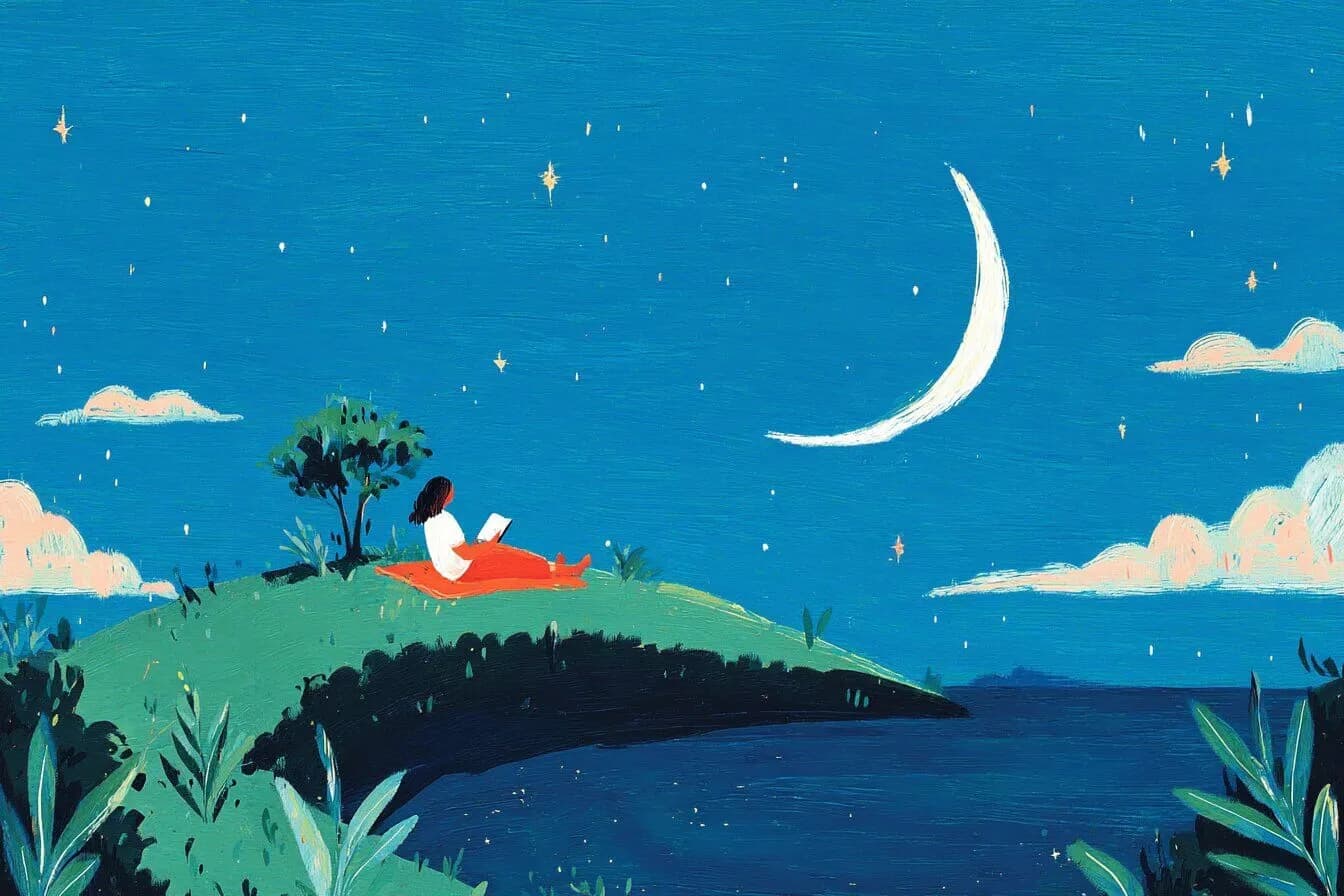
There is something about a quiet room and low lamplight that makes tender words feel larger than they are during the day. This gentle story follows Mira, a girl who writes moonlit letters to comfort a boy named Leo when his world feels heavy, and the night itself writes back. It is the kind of bedtime love story for boyfriend moments when you want something soft to carry you both into sleep. If you would like to craft your own version with names, details, and feelings that belong only to the two of you, try building one inside Sleepytale.
Why Love Stories Work So Well at Bedtime
A love story read at night does something different from the same story read in the morning. At bedtime your guard is down, the phone is quiet, and the small gestures in a story, a folded note, a hand held without words, feel more real because you are already in a tender state. That is why a bedtime story about love lingers in the mind long after the light goes off.
For couples especially, sharing a short story before sleep creates a ritual that says "this moment is ours." The rhythm of reading or listening together slows your breathing and turns your attention toward each other instead of tomorrow's to-do list. It is a small act of closeness, and the best love stories at night lean into that feeling by ending not with fireworks but with calm.
The Moon's Gentle Reply 6 min 28 sec
6 min 28 sec
Every night, when the sky went velvet and the first stars scattered themselves across it like salt tossed over a dark table, a girl named Mira climbed onto her windowsill with a sheet of paper and a silver pencil.
She wrote to the moon.
Not poems, exactly. Small dispatches about her school day, how Leo, the quiet boy who lived two doors down, had split his cookie with her at lunch. How he had drawn a rabbit in the corner of her homework so small she almost missed it. How his smile made something in her chest go warm and loose, like cocoa settling.
Leo always carried a sketchbook. The cover was soft from use, and one corner was held together with tape that had gone yellow. Mira noticed things like that.
She folded each letter into a paper boat, wrote "The Moon, The Sky, Forever" along the hull in her neatest handwriting, and left it on the sill where the wind could find it. She never saw the boats leave. By morning they were simply gone, and that was enough.
She believed the moon listened because each morning Leo arrived at school humming, his drawings a shade more colorful than the day before.
One evening after a rainstorm had scrubbed the rooftops and the clouds pulled apart like curtains on a stage, Mira wrote a longer letter than usual.
She told the moon that Leo's parents were arguing. That he had drawn a house with cracks running through the walls, thin dark lines he tried to erase but could not get rid of entirely. She said she wished she could wrap him in starlight so the noise would not reach him. She signed the letter in tiny stars, pressed it against her chest for three full breaths, and set it on the sill.
The wind did not take it.
Instead a soft silver glow pooled around the paper, and the sheet unfolded itself. Words appeared in moonlit ink: "Dear Mira, I already watch over Leo. But I will watch closer now, because you asked with such kindness. Love travels farther than light, and yours is strong enough to mend what feels broken."
Mira's breath caught.
She read the message three times, then pressed the paper to her cheek. The glow was cool, almost damp, like the air right before dew forms.
The next morning Leo met her at the gate holding a new sketch: a girl standing on the moon, a boy standing on Earth, a silver thread of light strung between their hearts like a telephone wire. He handed it over without a word, and she understood the moon had spoken to him too.
That night Mira wrote again, thanking the moon and asking whether she could help Leo find courage when his house felt too small and too loud.
The reply came as a shower of shooting stars that drifted through her open window and settled on the floor like fireflies, arranging themselves into two words: "Courage grows when shared."
So Mira invited Leo to build a star garden on her balcony. They used old jam jars, the kind with ridges around the middle, and filled them with the fallen starlight. They arranged the jars into constellations shaped like animals Leo loved to draw: a fox, a bear, a sparrow with its wings half open.
While they worked Mira told him about the letters, and Leo went quiet for a moment, then laughed, a short surprised laugh. He admitted he sometimes whispered to the moon too, asking it to keep Mira safe from bad dreams.
They looked at each other and realized the moon had been carrying their wishes back and forth like a glowing mail carrier who never took a night off.
Over the weeks the star garden grew. So did something between them that neither tried to name out loud.
Leo's parents found gentler words. The cracks got patched with apologies, long hugs in the kitchen, and one awkward family dinner where everyone laughed at the wrong moment and somehow that fixed more than the apologies did.
Leo began painting murals on the school walls: huge moons with knowing faces, girls holding flashlights like stars, boys releasing paper boats into painted skies. The art teacher said nothing about the paint on the hallway tiles. Some messes are worth keeping.
Mira kept writing letters, but now she asked the moon to watch over other kids, the ones who sat alone at recess staring at their shoes.
The moon always answered. Sometimes with a beam through the window. Sometimes with a dream of flying low over rooftops, close enough to touch the chimney smoke. Sometimes with one of Leo's sketches appearing on her desk, lines that seemed drawn in moonlight because they glowed faintly when she turned off the lamp.
One autumn evening, when the air smelled of cinnamon and leaf piles and the particular dusty sweetness of a radiator kicking on for the first time in months, Mira and Leo sat on the balcony surrounded by their jars.
They wrote a letter together, asking the moon to teach every child on Earth how to send love across distances.
The jars flared brighter than they had ever been, and a ribbon of light rose from the balcony into the sky where it burst, silent as a held breath, into a wave of kindness that traveled around the world and came back to them like a boomerang, wrapping them both in calm.
From that night on, whenever someone feels alone, they say a child once wrote to the moon, and the moon wrote back.
Mira still writes letters. She signs them, "Your friend Mira, who knows that love is a circle."
Leo draws circles made of hands, paws, wings, and fins, all connected by silver threads that never quite end.
And high above, the moon keeps reading, glowing a little warmer each time it hears someone whisper, "Please watch over the one I love."
The Quiet Lessons in This Love Bedtime Story
This story is really about two things at once: the courage to notice someone else's pain, and the discovery that caring for another person also heals something in you. When Mira writes her first worried letter about Leo's cracking house, children and adults alike absorb the idea that you do not need grand gestures to help, sometimes a folded paper boat is enough. Leo's surprised laugh when he learns Mira has been writing all along shows that vulnerability, sharing the secret, is what turns a kind act into real connection. These are reassuring ideas to sit with right before sleep, because they suggest tomorrow holds chances to be brave in small, quiet ways.
Tips for Reading This Story
Give the moon's written replies a slow, warm tone, almost as if each word is arriving one silver letter at a time, and pause after "Love travels farther than light" to let the line land. When Leo hands Mira the sketch at the school gate without a word, try leaving a beat of silence instead of rushing to the next sentence, so the listener feels the weight of that quiet gesture. For the star garden scene, you might tap gently on the bedside table each time they place a jar, giving the constellation building a little rhythm your partner can drift into.
Frequently Asked Questions
What age is this story best for?
While it is written with couples in mind, the language and imagery are gentle enough for listeners of any age. Mira and Leo's world of paper boats, jam-jar constellations, and moonlit letters keeps things innocent and cozy, so it works well for teens and adults who enjoy a softer, fairy-tale tone before sleep.
Is this story available as audio?
Yes. Press play at the top of the story to listen. The audio version brings out the contrast between the quiet windowsill scenes and the brighter moments, like the shooting stars drifting into Mira's room, in a way that feels almost cinematic with your eyes closed. The moon's replies especially gain a gentle gravity when heard aloud.
Can I personalize the names and details to match my own relationship?
Absolutely. Inside Sleepytale you can swap Mira and Leo for your own names, change the paper boats to paper airplanes or folded stars, and even set the story in your own neighborhood. Small personal touches, like a cookie flavor you both love, make the story feel like it was written just for the two of you.
Create Your Own Version
Sleepytale lets you turn a handful of loving details into a story that sounds like it came from you. Swap the moon for a lighthouse, trade Mira's paper boats for folded stars, or set the whole tale on a rooftop in your own city. In a few moments you will have a cozy love story you can replay whenever you both want a peaceful ending to the night.
Looking for more couples bedtime stories?
Funny Short Bedtime Stories For Girlfriend
Ben retells Shrek so loudly the neighbor's dog barks back in this short funny short bedtime stories for girlfriend favorite.
Funny Short Bedtime Stories For Boyfriend
A guitar serenade drifts to the wrong window in this short funny short bedtime stories for boyfriend tale about Mateo and a bearded neighbor.
Cute Short Bedtime Stories For Girlfriend
Discover short cute short bedtime stories for girlfriend featuring Mia waiting for Oliver's goodnight text under the stars.
Cute Short Bedtime Stories For Boyfriend
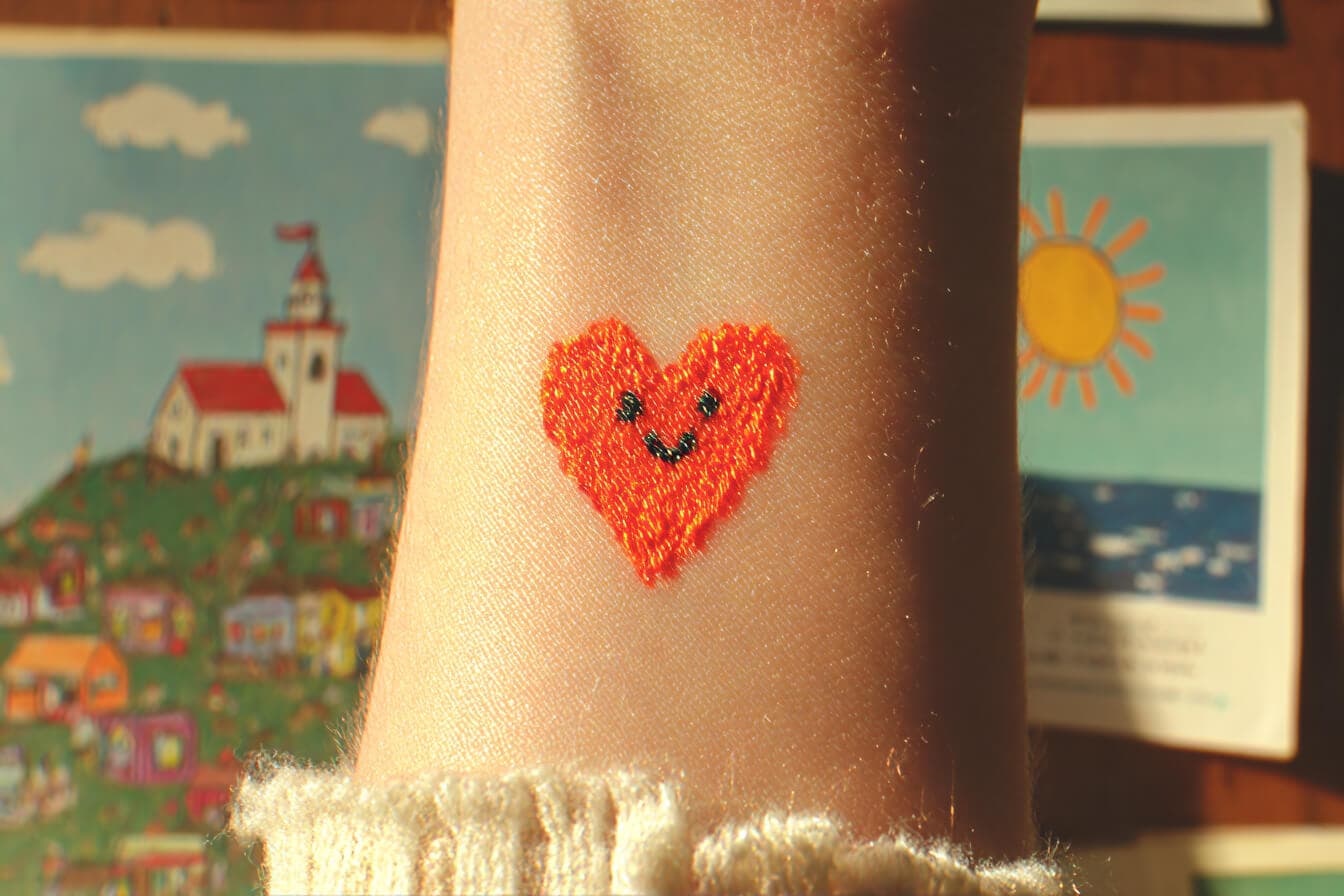
Forget grand gestures; a silver marker and a tiny heart a wrist say everything in this short cute short bedtime stories for boyfriend gem.
Bedtime Love Story For Your Girlfriend
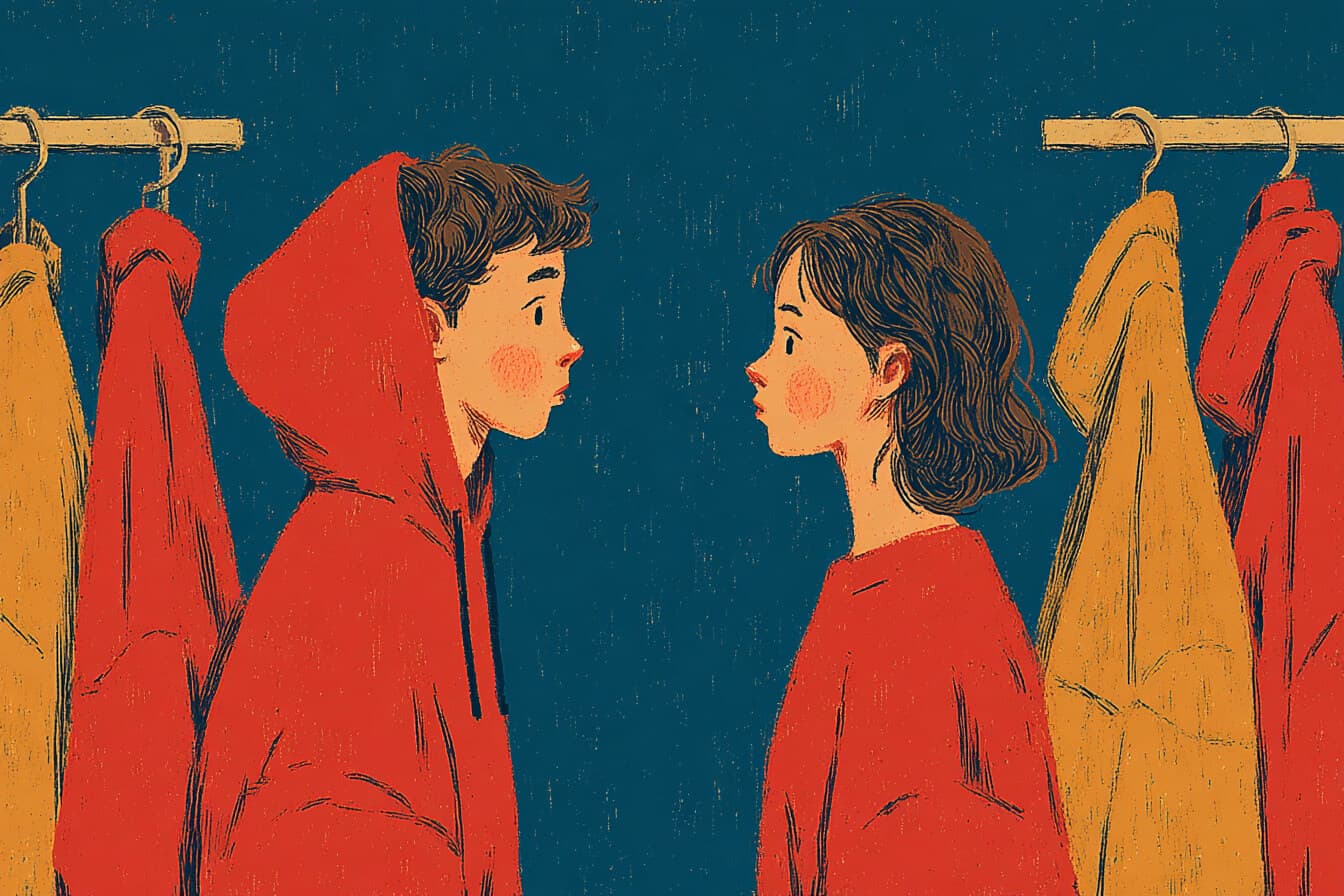
This short bedtime love story for your girlfriend centers two blue hoodies, a pinky promise, and the gentle joy of learning to share.

Bedtime Love Story For Your Boyfriend
A short bedtime love story for your boyfriend winds through back roads, peach stands, and three quiet hand squeezes that say everything.